I did not start intermittent fasting because of blood sugar. I started because I was too lazy to get out of the car to eat.
I am a Type 2 diabetic, and by the time fasting became part of my life, I had already lost around 7 to 10 kilograms — not through any programme, but because my taste palette had shifted on its own somewhere around age 43. Food I used to love stopped pulling at me the same way. I ate less without trying. The weight came off quietly, without drama.
At the time, I had a routine I genuinely loved. Every morning I would drive my sons to school, park outside, walk to the nearby restaurants for breakfast, go back to the car, and sleep until lunch. Then walk back for lunch. Deeply lazy, deeply satisfying.
Then one morning I was sleeping in the car and the thought of getting up to eat just put me off. Not out of discipline or health awareness — purely because I could not be bothered. So I slept instead. This started happening more regularly, on the days when sleep felt more valuable than food. I eventually did a rough calculation and realised I had not eaten for close to twelve hours. I thought: isn’t this intermittent fasting?
It was. That accident became a habit, the habit became a structured window, and the window eventually became 16:8. It was only once I started tracking my blood sugar readings that I realised something more significant was happening beyond just the weight.
Here is what actually happened.
What I expected versus what actually happened
My assumption going in was simple: eat less, blood sugar drops, problem partially solved. That is not quite how it works.
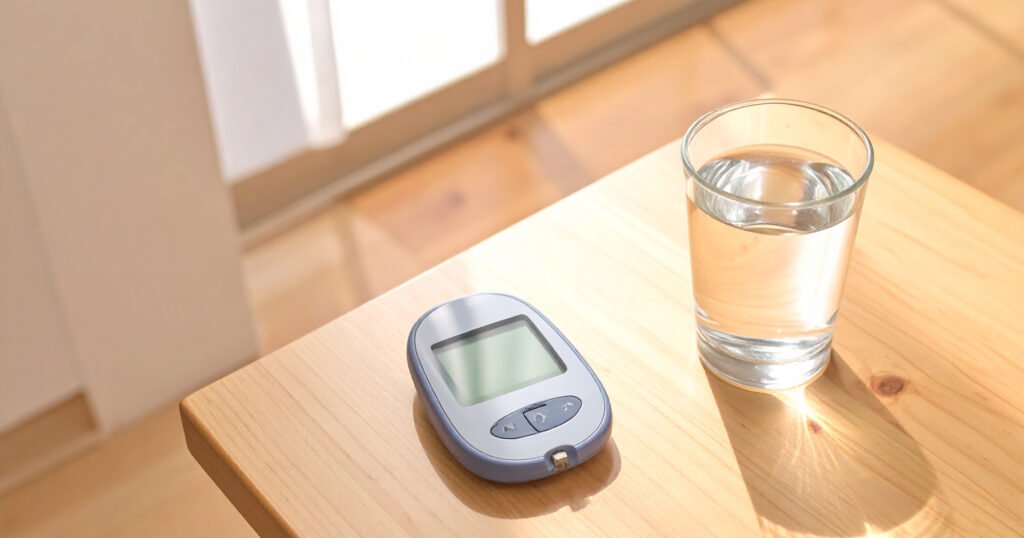
In the first week or two of 16:8 fasting, my blood sugar readings were inconsistent. Some mornings they were lower than usual. Other mornings they were higher than they had been before I started — despite the fact that I had not eaten since the previous evening. I had no idea what was going on.
What I later learned is that this is normal. When you fast overnight and your body senses it needs fuel, it can release stored glucose from the liver — a process called the dawn phenomenon or hepatic glucose release. For Type 2 diabetics, this can temporarily push morning readings up even when you have not eaten anything.
Knowing this would have saved me a lot of confusion in those first few weeks.
What changed after the first month
Once my body adjusted — and it did take about three to four weeks — the pattern shifted. My fasting glucose readings started coming down consistently. Not dramatically, not overnight, but steadily.
My eating window (noon to 8pm) also meant I was naturally eating fewer meals, which reduced the total number of blood sugar spikes throughout the day. Less food going in meant fewer insulin responses required. Over time, my body started becoming more sensitive to the insulin it was producing — which is exactly the problem that Type 2 diabetes creates in reverse.
I am not going to give you numbers from my readings because every T2D case is different and what happened to me will not map exactly onto what happens to you. What I can tell you is that my doctor noticed the improvement. My HbA1c — the three-month average blood sugar measure — moved in the right direction.
The things nobody told me to watch for
A few things caught me off guard that I think are worth knowing before you start.
Medication timing matters. If you are on medication that lowers blood sugar — particularly anything that stimulates insulin release — taking it in the morning when you are not eating can push your glucose too low. This is not something to figure out by trial and error. Talk to your doctor before starting, or at minimum monitor your readings closely in the first two weeks.
The eating window timing affects your readings. A noon to 8pm window worked well for me because my glucose had time to stabilise overnight before I broke my fast at noon. If you break your fast earlier or later, you may see different patterns. Pay attention to what time you are eating and what your readings look like two hours after.
Stress and sleep affect blood sugar even when you are fasting. On nights when I edited photos until 3am, my morning readings were consistently higher — regardless of what I had eaten the night before. Cortisol raises blood sugar. This confused me for months until I started tracking it alongside my sleep hours.
What I wish I had done differently
I did not track anything. No log, no app, no notebook. I checked my blood sugar occasionally and noticed it was generally improving, but I had no idea why specific readings were higher or lower on specific days. I was flying blind.
What I know now is that blood sugar does not move in a straight line — sleep, stress, meal timing, and what you ate the night before all affect the reading you see in the morning. Without tracking any of it, I spent months confused by patterns I could have understood in weeks if I had been writing things down. The night I stayed up until 3am editing photos would explain the high reading the next morning. The stress of a difficult week would explain why a reading came in high despite me eating well. I never connected any of this at the time because I had no data to look at.
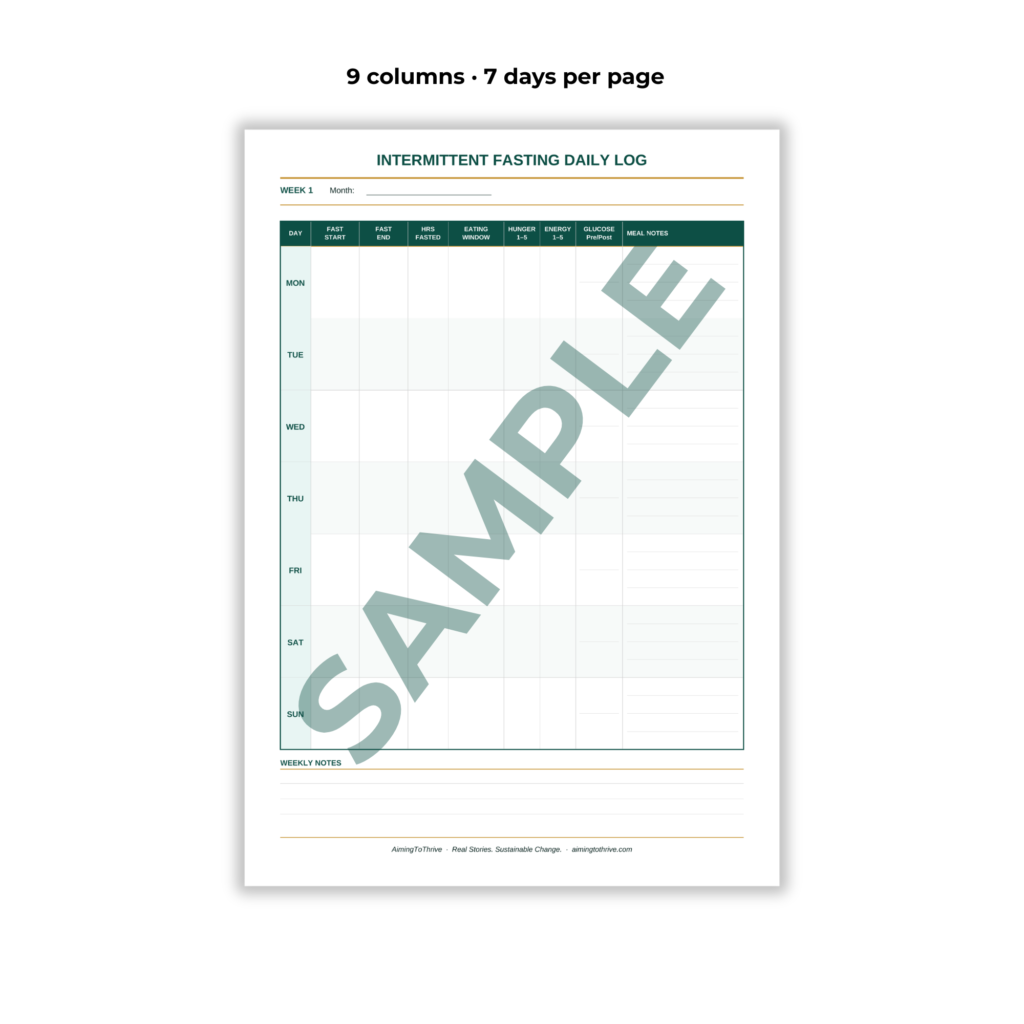
If I were starting again, I would keep a simple log — fasting window, blood sugar before breaking fast, a reading two hours after eating, and a short note on how I felt or how I slept. That is all. Nothing complicated. Just enough to see patterns that a doctor’s appointment every few months cannot capture.
What I would tell someone starting 16:8 with Type 2 diabetes
Give it at least four weeks before drawing any conclusions. The first two weeks are adjustment, not results. If your readings are inconsistent early on, that is normal — it does not mean fasting is not working.
Track your own data. Not obsessively, but enough to see patterns. A simple log on paper is sufficient. Apps are fine but not required.
Talk to your doctor before adjusting any medication. The fasting will likely improve your insulin sensitivity over time, which is a good thing — but it also means the medication doses that worked before may need reviewing.
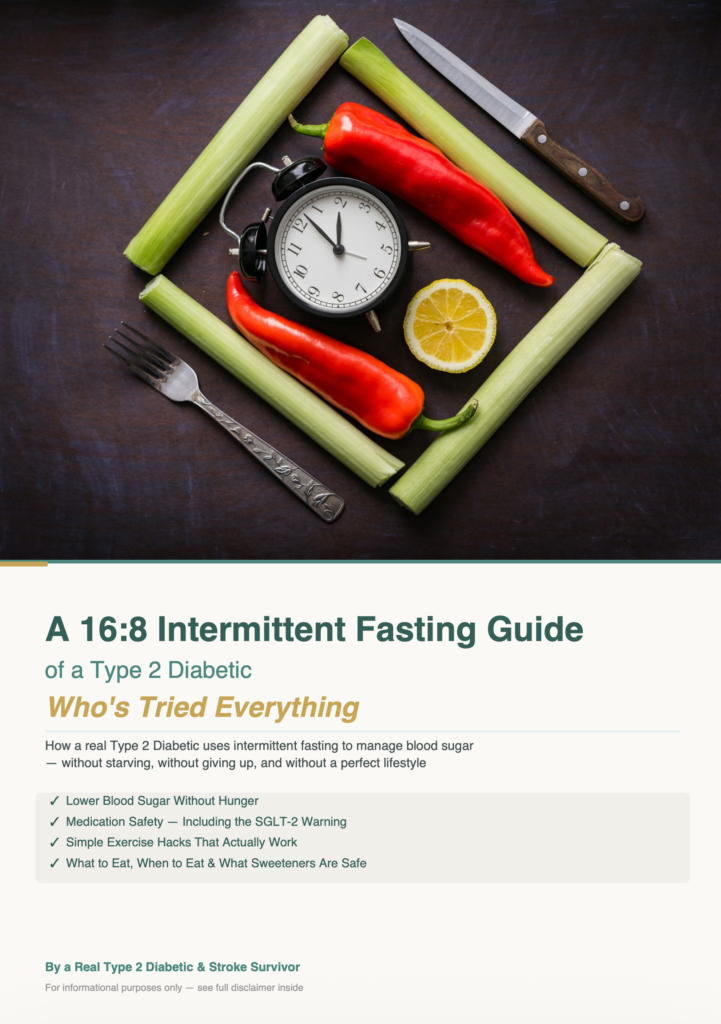
And if you want the full breakdown of what I did — including how I structured the fasting window, what I ate during my eating window, how I timed medication, and what the research actually says about 16:8 and insulin resistance — I wrote it all down in my guide.
And if you want to start tracking your own fasting and blood sugar patterns, this printable daily log was designed for exactly that.