
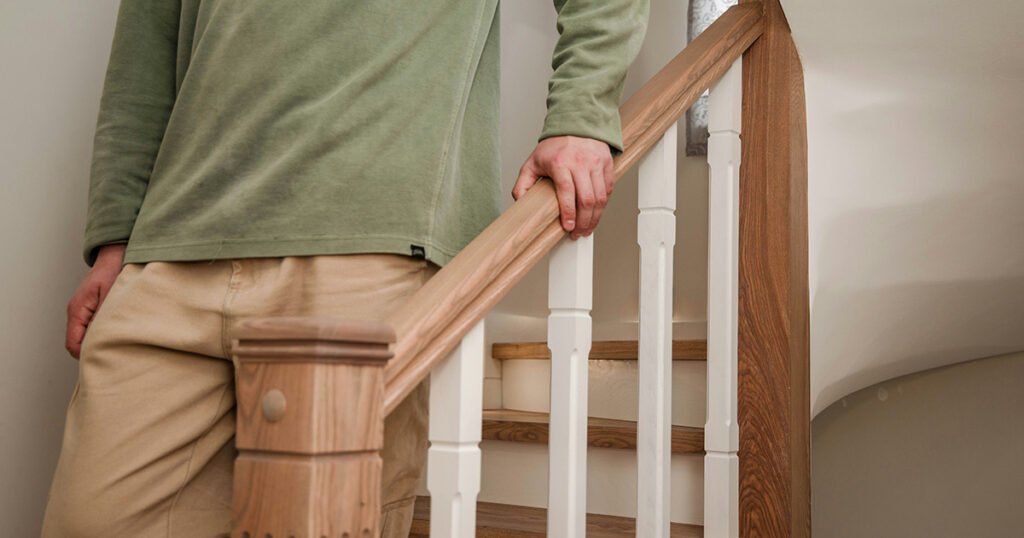
After a meal, I often walk up the one flight of stairs at home and back down again, six times. It takes about three minutes. I picked the habit up from a video about stair climbing and blood sugar, which cited a couple of studies.
I did not read those studies myself at the time. I just started doing it, three minutes at a time, because three minutes felt doable. When I finally sat down to check what the studies actually tested, I found two things worth sharing. One was done in people with Type 2 diabetes, using almost exactly the routine I had copied. The other compared different lengths of stair climbing after a meal, and three minutes came out ahead of ten. I was quite happy about that.
The study my routine came from
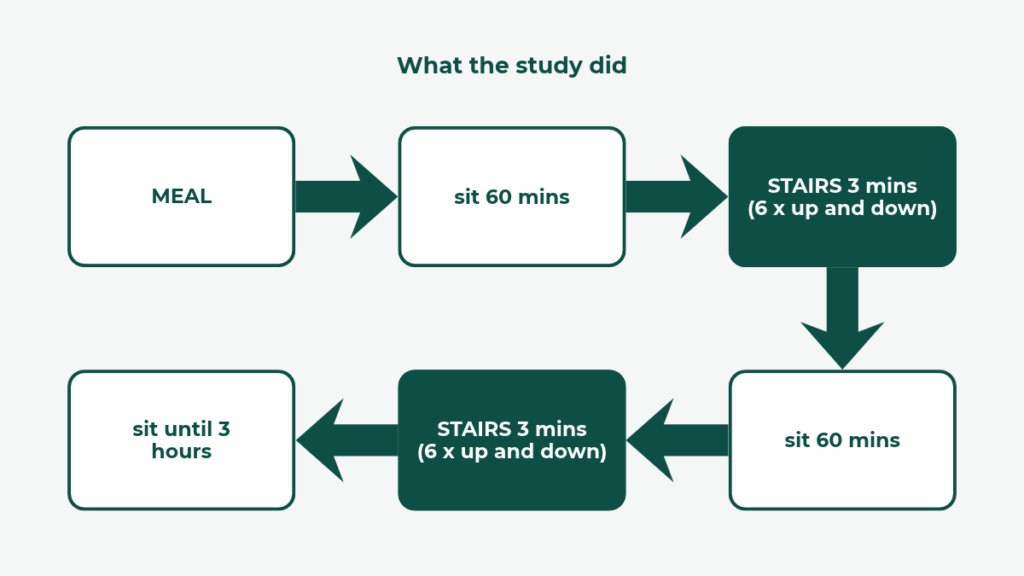
In 2016, a team in Japan tested stair climbing in 16 people with Type 2 diabetes, with an average age of 65. Everyone ate the same breakfast. On one day they sat for three hours afterwards. On the other day they also sat, but at 60 minutes and again at 120 minutes after eating, they got up and climbed and descended a flight of stairs six times. Each bout took three minutes.
Over those three hours, their blood sugar was 18% lower on the stairs day than on the day they sat still. That came from two three-minute bouts, so six minutes of stairs in total.
Six trips up and down one flight, about three minutes. That is the routine I picked up from the video, almost step for step. It was reassuring to find that the study behind it was done in people with Type 2 diabetes, like me, rather than in young, healthy students.
One detail I did not expect: during the stair bouts, the participants’ heart rates reached 70 to 89% of the maximum expected for their age. The researchers classed that as high intensity, even though the participants rated the effort as only moderate. Stairs can feel easy while your heart is working harder than you think. That matters if you have heart or blood pressure problems.
Does the benefit last if you keep doing it?
The same research group ran a follow-up in 2017. Seven men with Type 2 diabetes, average age 68, did it at home after every meal for two weeks: two three-minute bouts of brisk climbing and slow descending. Then they stopped for two weeks.
The researchers measured a blood marker called 1,5-anhydroglucitol. You do not need to remember the name. It falls when your blood sugar keeps spiking after meals, so when it rises, it means fewer spikes. After the two weeks of stairs, it had risen by 11.5%. Two weeks after they stopped, it was back where it started.
Two things to keep in mind. This was only seven men, so it is a small study. And the benefit seems to last only as long as you keep doing it. Their fasting blood sugar did not change either. This is about the spikes after meals, not your morning reading.
Good news if ten minutes sounds like too much
I will be honest: ten minutes of stairs is not something I would keep up. Three minutes I can do. It is natural to assume more is better, so I half expected the research to tell me three minutes was not enough.
A 2024 study tested it directly. Thirty-one young adults ate the same 650-calorie meal on four separate mornings. On one morning they sat. On the others they climbed and descended stairs for one, three or ten minutes, finishing just before a blood test half an hour after the meal.
All three lowered blood sugar compared with sitting. But three minutes did the most: about 18 mg/dL (1.0 mmol/L) lower than sitting, against about 10 mg/dL (0.6 mmol/L) for ten minutes. Three minutes also beat ten on insulin. One minute on its own came to about 14 mg/dL (0.8 mmol/L) lower.
Before taking that too far: these were young adults without diabetes, and blood was only tested once, at the 30-minute mark, so it does not prove the same is true for us. But it does mean you are not missing out if you choose the shorter three minutes because ten feels too hard. For blood sugar after a meal, three minutes seems to do much of the work. If you really enjoy doing it for longer, go for it.
How it fits into my day
I do not do the stairs after every meal. Some days I walk for 20 to 30 minutes after eating instead. Some days it is calf raises or soleus pushups while I watch something. Some days I go straight to the gym. The stairs are what I do when I have three minutes and no plan.
That is the real appeal. There is nothing to set up, no clothes to change, and nothing to decide. If you have stairs at home, the equipment is already there.
I also have not measured what my own stair habit does to my readings. I do it because the research points that way, not because my own numbers proved it.
Doing it safely
The Japanese researchers specifically warned about the risk of falling on the way down, especially for older people. So climb at whatever pace feels brisk for you, come down slowly, and keep a hand on the rail both ways.
If you have heart problems or high blood pressure, check with your doctor first. As the first study showed, stairs push your heart rate up more than they feel like they do. Stop if you get chest pain, dizziness, or breathlessness that feels unusual for you.
And if you take insulin or medication that can cause low blood sugar, such as sulfonylureas, keep an eye on your readings as you add more movement after meals. That is a conversation for your doctor, not a blog post.
No stairs at home? Stepping up and down on a single step, or walking, works the same leg muscles. Those were not what these particular studies tested, but moving is better than sitting still.
The short version
Stair climbing after a meal has better evidence behind it than I expected. In the study closest to real life, six trips up and down one flight, done twice after breakfast, lowered blood sugar by 18% over the next three hours compared with sitting still. A study in young adults found three minutes did more than ten. And the benefit seems to fade within two weeks of stopping, so this works as a habit, not a one-off.
If you want to copy it, the timing is worth knowing. None of the studies had people jump up the moment they put their fork down. The bouts started anywhere from about 20 minutes to two hours after the meal began, so there is no need to rush from the table.
If you want the whole story of how I went from 95kg to 70kg, including going back to exercise after twenty years off, it is all in my guide.
If you would rather start even smaller, I wrote about whether 10 squats every 45 minutes really does what people claim.
Sources
MEDICAL DISCLAIMER
I am not a doctor. I write from personal experience as someone managing Type 2 diabetes, and from reading the published research. Nothing here is medical advice. Speak to your doctor before making changes that could affect your blood sugar or medication.