
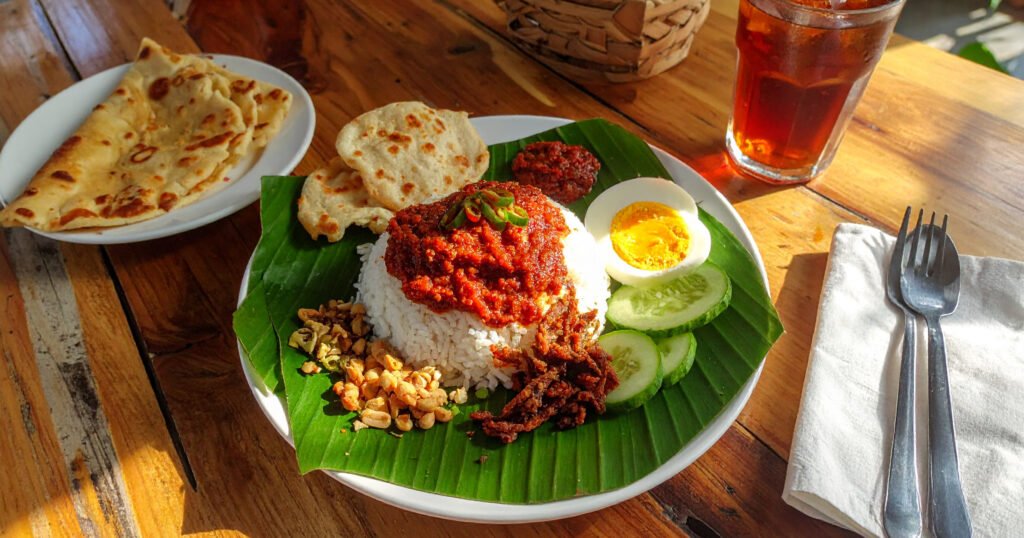
Yes, all three of those things can be true at the same time.
Most food content written for Type 2 diabetics shows you a diet nobody actually eats. Grilled chicken, steamed broccoli, a small portion of brown rice, photographed nicely. It is not exactly wrong — that food is genuinely healthy and it would work. The problem is that most people find it joyless, and a diet you do not enjoy is a diet you abandon. Advice you cannot keep up is not much use, however sound it is on paper.
So this is the other version. This is what I actually eat, in Malaysia, as a Type 2 diabetic who has come down from around 95 kilograms to 70. It includes McDonald’s. It includes char koay teow. I have not cleaned it up.
First, what a day used to look like
To understand what changed, you need to see where it started. This was my normal — not a bad day, not a blowout. This was Tuesday.
I would send my son to school in the morning, then go straight to a mamak. Nasi lemak, a roti canai, two half-boiled eggs, a glass of teh ais. That was breakfast, and I never questioned it.
Lunch would be chicken rice, or banana leaf rice. Tea time might be a sandwich, or whatever looked good in 7-Eleven, with a Coke. Dinner was open — nasi lemak again, or char koay teow, or pasta, or Domino’s, or KFC.
Then supper. Two Ramli burgers, or a McDonald’s large set with two pieces of fried chicken, plus another burger, plus a Coke or a McFlurry.
Five eating occasions a day. I ate roughly like that for years. Possibly decades. That is how I ended up at 95 kilograms with blood sugar readings between 20 and 30 mmol/L despite being on medication.
I am not telling you this as a confession. I am telling you because the food on that list has not entirely disappeared from my life, and that turns out to be the interesting part.
Why this is harder in Malaysia
Before the tactics, it is worth naming the terrain, because a lot of health advice is written for people shopping in a different country. To be clear up front: the principles further down work anywhere. It is only the obstacles that are local.
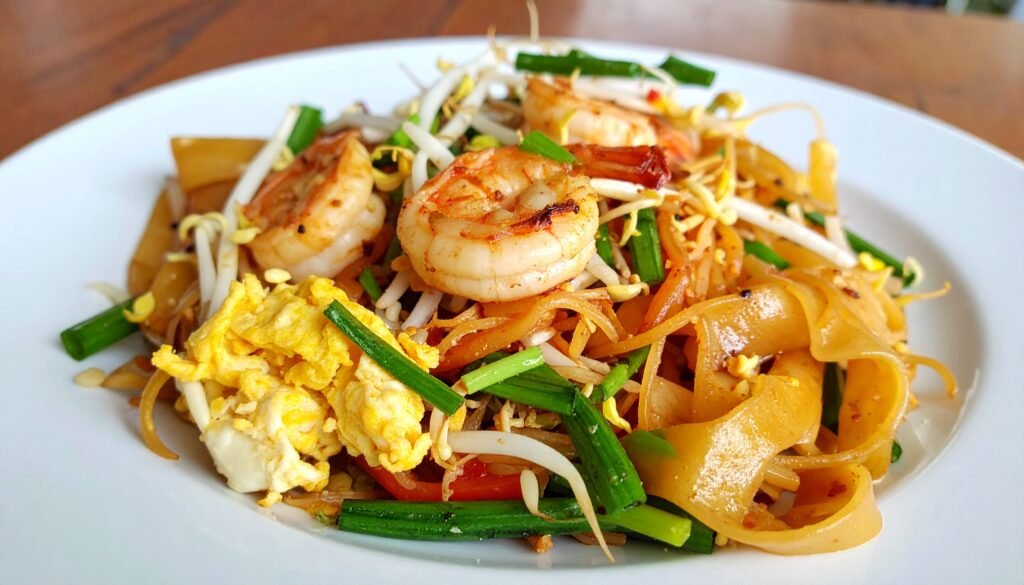
Cheap food here is carbohydrate-heavy. The affordable meal is rice or noodles with some vegetables and a modest amount of protein. And because the protein and vegetables are the expensive parts, the portions of them stay small — so the carbohydrate does the job of filling you up. A bigger scoop of rice is the cheapest way to make a plate feel like a meal. That is what an economical lunch looks like here, and it is what most people eat most days.
Clean protein is expensive and awkward to find. Steak is costly even if you cook it yourself. Protein-forward dishes exist, but they are usually the pricier option and not the thing on the corner. The default is not a chicken breast and salad — the default is nasi.
The food is good and it never stops. Mamak at 7am. Mamak at 2am. There is no hour of the day where the options run out, and the options are genuinely excellent. This is not a country where you accidentally eat less because there is nothing around.
None of that is an excuse. It is just the actual situation, and any approach that ignores it will not survive contact with a Tuesday.
What a normal day looks like now
I eat within roughly an eight-hour window, from around noon to around 8pm. Two main meals, occasionally something in between.
Breaking the fast, around noon. Whatever is available where I am. Salted egg prawn rice with a fried egg and some vegetables. Soup udon. Soup pan mee. A gochujang beef and prawn bowl with cold soba. A Subway salad bowl with two proteins, usually beef and chicken. A breaded chicken chop.
Mid-afternoon, if I want it. A protein shake or a meal replacement shake. Often I skip it.
Second meal, early evening. This is where most of the swapping happens. Fried konjac noodles with one or two proteins — salmon, bakso balls, grilled chicken — sometimes with a side salad and a couple of fried eggs. Korean bulgogi with beef, rice cake, konjac noodles, enoki mushrooms and egg. Or something soupy, like seaweed soup or a curry, again with konjac noodles.
Dessert, if I want it. One kaya butter toast. Or one pastry — a kaya puff, a salted egg yolk pastry. Or a Snickers bar. Or a single Ferrero Rocher.
And a reset day
Twice a week, on non-consecutive days, I eat across a longer window — roughly 8am to 8pm rather than noon to 8pm. Same food quality, more hours, three meals instead of two.
The first meal on those days is unapologetically Malaysian. Chinese-style mixed rice with a half portion of white rice, two meat dishes, a steamed or fried egg and a vegetable. Or char koay teow with two half-boiled eggs on buttered toast. Or sar hor fan with the same.
The rest of the day looks like a normal day, with a third meal or a shake if I need it.
Reset days are not cheat days and I would push back on that framing. A cheat day is permission to undo the week. A reset day just opens the window wider — the food quality stays the same.
There are two reasons for them. The first is straightforward: holding a restricted window seven days a week is how people quit in month three. Two easier days is what makes the other five repeatable.
The second is metabolic. When you restrict continuously, week after week, your body adapts — resting metabolic rate drifts down and the same routine starts producing less. A 2024 meta-analysis covering twelve trials and 881 people found that planned breaks from restriction reduced that drop compared with restricting continuously, with fat loss coming out about the same either way.
Worth being honest about the size of it, though. The metabolic rate difference in those studies was under 100 calories a day, and the breaks they tested were one to two weeks long rather than two days a week. So I would not oversell this as the reason to do it. For me the sustainability argument is the one that actually carries the weight — the metabolic rationale is a reasonable bonus rather than the point.
Notice that the list barely changed
Go back and compare the two.
Char koay teow is still there. Rice is still there. McDonald’s is still there. Kaya toast, pastries, chocolate — all still there. I did not eliminate a single food group, and I have never once told myself that something was off limits.
What changed was when I eat it, and how much of it there is.
That is genuinely most of it. Five eating occasions became two or three inside a defined window. Full portions became fine-tuned portions. The food stayed.
I think this matters because most advice puts the emphasis the other way round. Plenty of it does ask you to restrict a window or watch your intake, and fairly so — but the first thing it usually asks is that you swap the food itself for things you find dull. That was never going to work for me. I love these foods. Asking me to give them up permanently was asking for a version of me that does not exist. Asking me to eat them in a smaller window, in smaller amounts, turned out to be something I could actually keep doing for five years.
Why two meals rather than six
There is a reason I eat two larger meals rather than grazing across the day, and it is worth a short detour because it explains why the timing matters at all rather than just the amount.
Every time you eat, insulin rises to deal with it. Eat six times a day and insulin rarely gets the chance to come back down — it stays somewhere above baseline for most of your waking hours. Leave proper gaps and it settles between meals. For anyone whose body is already struggling to respond to insulin properly, that difference in how much time is spent with it elevated seems to matter.
There is a study I keep coming back to on this. Researchers in Prague put 54 Type 2 diabetics through two eating patterns for twelve weeks each — identical calories, identical macronutrients, the only difference being whether it was split into two larger meals or six small ones. The two-meal group lost more weight, had lower fasting glucose, less fat in the liver, and improved insulin sensitivity.
Same food. Same calories. Different number of sittings. Different result.
Two things to be straight about. Their two meals were breakfast and lunch, so they were eating earlier in the day than I do — that may matter, and my pattern is not a like-for-like copy of theirs. And it is one study of 54 people, not settled science.
But it lines up with what I have seen in my own readings, and it is why I would rather have two meals I actually look forward to than six small ones that never quite satisfy me. Insulin resistance is the thing underneath all of this — how it develops, and what genuinely helps improve it — and it deserves a post of its own rather than a paragraph here. I will write that one properly.
The one swap that did most of the work
If you take a single practical thing from this post, take this one.
I did not stop eating noodles. I changed what the noodles are made of.
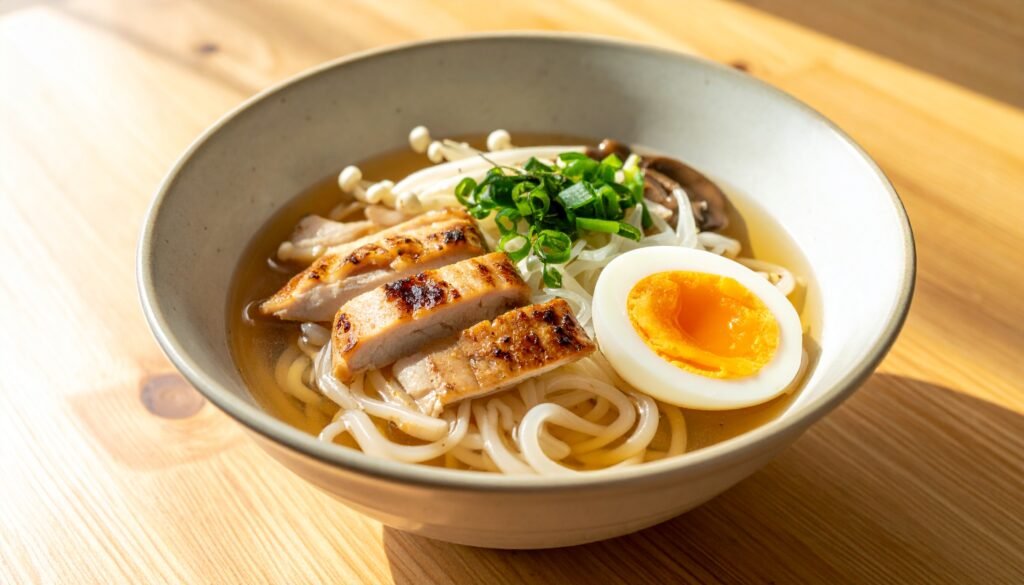
Konjac noodles — sometimes sold as shirataki — are now the default base in most of my second meals. Fried with protein and egg. In a bulgogi. In a curry. In soup. They behave like noodles, they carry sauce like noodles, and they let me keep eating dishes I would otherwise have had to drop.
It is not a magic food and I am not going to oversell it. It is simply a swap that let a noodle dish stay a noodle dish. That is worth more than any food I successfully gave up, because I never had to fight for it.
I eat dessert with my meals, not between them
This is the thing I worked out from my own readings and have not seen written down much.
When I want something sweet, I eat it immediately after a meal rather than on its own two hours later.
The reason is simple once you have watched your own numbers for a while. Sugar eaten by itself, on a relatively empty stomach, produces a sharper rise than the same sugar eaten alongside protein, fat and fibre. Same biscuit, different consequence, depending entirely on what else is in there with it.
So the Snickers goes in at the end of a meal. The kaya toast goes with the meal. If I want a couple of biscuits, they happen while I am still at the table rather than at nine o’clock on their own.
It costs nothing, it requires no willpower, and it means dessert stopped being a separate event that my body had to deal with on its own.
The rest of it
Everything else I do falls into the same pattern — adjust the size or the frequency rather than removing the thing.
Half portions of rice rather than no rice. On a mixed rice plate I take half the usual scoop and let the meat and vegetables fill the gap.
One of a thing, not a packet. One Ferrero Rocher. One Snickers. One pastry. The specificity matters more than it sounds — “some chocolate” has no edges, “one Ferrero Rocher” does.
Split what you can. Half the iced mocha, my wife takes the rest. Neither of us went without and I had half the sugar.
Frequency, not elimination. McDonald’s once or twice a week is a completely different thing to McDonald’s as a supper habit. The food did not become acceptable or unacceptable. It just became occasional.
What I do not do
I do not count calories. I do not meal prep. I do not keep a list of banned foods.
Don’t get me wrong — none of those are bad ideas. Calorie counting works, and for people who keep it up it is probably the most precise tool available. Meal prep works. Cutting things out entirely works. I know people doing all three who are in better shape than I am.
They are simply not things I can sustain.
So the question worth asking is not which method is best. It is which one you will still be doing in a year. An approach that suits you and survives beats a better one you abandon in March.
I also do not eat like this perfectly. Some weeks are worse than others. The approach survives that, which is much of the reason it has lasted.
Food is not the only lever
Everything above is about eating, and eating did most of the work for me. I lost the first eight to ten kilograms before I changed anything else at all.
But it is not the only thing that improves insulin sensitivity. Once the food side is steady, there are other things worth adding on top of it.
Movement is the obvious one, and it does not have to be complicated or strenuous. Some of the most useful things I have found are small, unglamorous, and can be done sitting down at home while you get on with your day.
The clearest example is the soleus pushup — a seated movement that a University of Houston study found improved post-meal glucose considerably. It takes no equipment and barely feels like anything. I wrote about how to do it properly, since a lot of what circulates about it online is not what the research actually describes.
More on this to come. I am putting together a series on simple things a Type 2 diabetic can do at home to help with blood sugar — so keep an eye on this space.
What this is not
This is not a meal plan and you should not treat it as one. It is a description of what one person eats, not a prescription for what you should.
Your body is not my body. Foods that barely move my readings might move yours considerably, and the only way to know is to check your own numbers rather than trusting mine. That is the whole reason I keep telling people to write things down.
And if you are on medication, talk to your doctor before changing how or when you eat. Meal timing interacts with medication timing, and that is not something to work out by trial and error.
The short version
I eat mostly the same food I always did. I eat it in a window rather than all day, and in smaller amounts, and I put the sweet things alongside meals rather than on their own.
That is it. It is not effortless — halving a portion takes something, and if sugar is the thing you find hardest to give up, it will ask more of you than it asked of me. Discipline is not the same size for everybody.
But I made the changes small and gradual enough that I never had to become a different person to keep them going. That is the part that made it last.
If you want the whole five-year version — what changed, in what order, and how small each step actually was — that is what my guide covers.
And if you want to see how your own meals affect your readings, this printable blood sugar tracker has space for exactly that — including a notes column for what you actually ate.
I am not a doctor or a nutritionist. I write from personal experience managing Type 2 diabetes. Nothing here is medical or dietary advice. Speak to your doctor before making changes that could affect your blood sugar or medication.