
I had not set foot in a gym in decades. Not in a dramatic way — I just found them pointless, slightly embarrassing, and full of people who looked like they had never needed to be there. I was not that person. I was the person who ordered late-night supper after editing photos until 2am and genuinely could not see why anyone would voluntarily do burpees.
I went back to the gym in September 2023, at 46. Not because I had a revelation. Not because I read something inspiring. My eldest son wanted to start going, and I decided that was as good a reason as any to join him. I had already come down from around 95 kilograms to 80 through the taste shift and intermittent fasting, so the timing worked.
Fourteen months later, I had a stroke.
What the gym did and did not do
I want to be honest about this because I think people expect a certain kind of story — the one where consistent exercise prevents the bad thing from happening. That is not what happened to me.
The stroke happened in November 2024. I was 47, reasonably active by my own standards, lighter than I had been in years, and my blood pressure was being managed through lifestyle rather than medication. None of that stopped it. The stroke happened anyway.
It was a lacunar stroke. I did not have the classic warning signs people are told to look for — no drooping face, no slurred speech. Just weakness down my left side. I spent three days in intensive care.
What I believe the gym did do — and I cannot prove this, but my doctors have not disagreed — is give me a recovery base. Fourteen months of twice-weekly training before a stroke is fourteen months of cardiovascular adaptation, muscle conditioning, and general physical resilience that was not there before. My recovery moved faster than I expected. I do not know for certain that the gym caused that. But I think it contributed.
That is the honest version of the story. Exercise is not a guarantee. It is a form of insurance you hope you never need to claim.
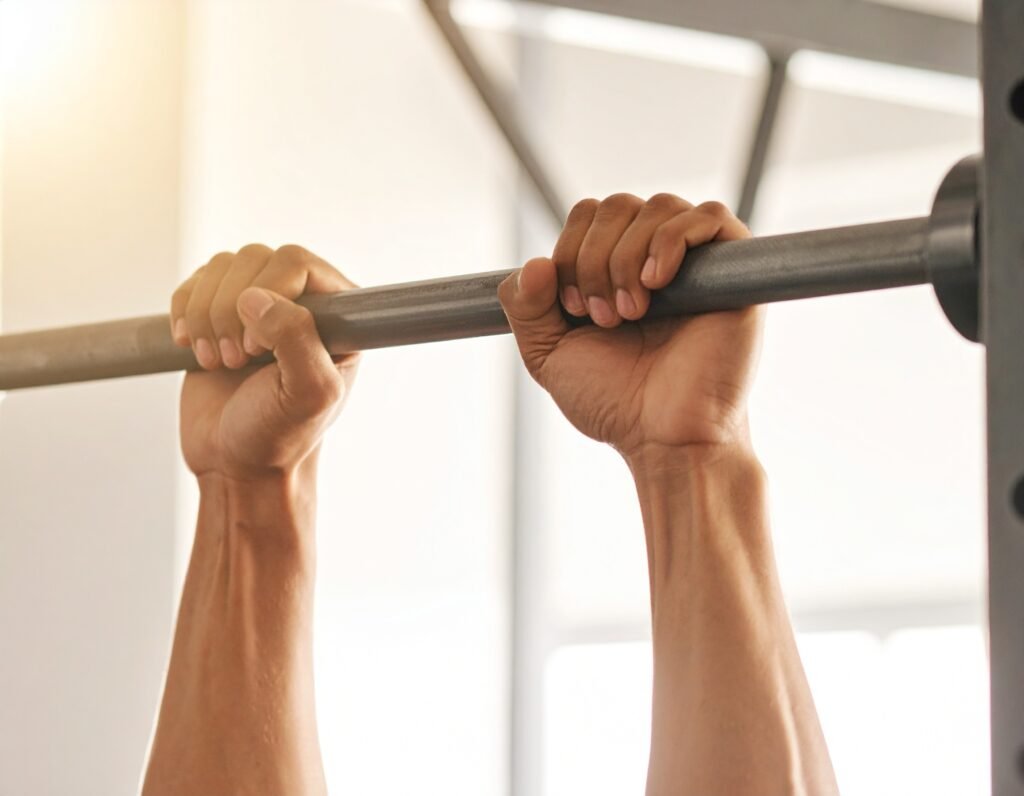
Starting at 46 with Type 2 diabetes and no idea what I was doing
When I walked back into a gym at 46, I had Type 2 diabetes, high cholesterol, blood pressure that had only recently come under control, joints that were starting to complain, and decades of not having trained. I did not know what most of the machines were for. I did not have a programme. I was, objectively, the demographic that gyms are not designed for.
The first few weeks were humbling in a way I had not anticipated. Not because anyone said anything — they did not — but because I discovered that my body could do considerably less than I assumed it could. I had to start far lighter, far slower, and far shorter than felt reasonable for a grown adult.
What I wish I had known then: starting that low is correct, not embarrassing. The people who have been in the gym for years all started somewhere. The ones who sustain it are the ones who did not try to do too much too fast and injure themselves out of the habit in week three.
What actually worked for someone like me
I went twice a week and I still go twice a week. Not because I am particularly disciplined — I am not — but because twice a week is achievable for a person with a full life, and achievable beats optimal every time.
I kept the cardio low intensity for a long time. With Type 2 diabetes and blood pressure concerns, I was not doing HIIT sessions and pushing heart rate limits. I used the bike, the elliptical, and the stair stepper, kept my effort at a level where I could still have a conversation, and I stayed there for most of a year. It is less exciting than the programmes fitness influencers post. It is also the reason I did not quit.
I stuck to machines rather than free weights. I avoided barbell squats and deadlifts entirely — not because they are bad exercises, but because my shoulders and knees were not in a position to do them safely. I worked in the 12 to 18 rep range, close to failure, on equipment where the movement path was controlled for me. I asked gym staff for help with machine positions rather than guessing and risking injury.
I also stopped going on days when my blood pressure read 140 or above. That rule came later, but it is one I still follow.
The biggest shift was accepting that I was not going to look like the other people in the gym, and that this was never the point. The point was to be a person who goes to the gym. Everything else follows from that, slowly, over time, in ways you do not notice until one day you do.
Going back after the stroke
Returning to the gym after a stroke is its own experience. There is a specific kind of caution that comes from knowing your body has failed you once, even temporarily. Every moment of elevated heart rate carries a weight it did not carry before.
I went back gradually — physiotherapy first, twice a week, working on shoulders, knees and hips. Then the gym again, with clearance from my doctor, at a lower intensity than I had been working at before. The instinct to jump back to where I was had to be managed carefully. The goal was not to reclaim what I had lost quickly — it was to rebuild safely, without triggering anything, and to remind my body that movement was still something we were doing.
It worked. I am 49 now, back to twice a week at the gym plus physio, with dumbbells at home on the days I have the energy. The intensity has returned, mostly. The caution has not gone away, and I do not think it should.
What I would tell someone starting at 46 or later
Start lighter than you think you need to. Go less often than you think you should. Make it so easy to do that you run out of reasons not to go. The fitness gains come later — consistency comes first.
f you have Type 2 diabetes, talk to your doctor before starting but do not use that conversation as a reason to delay indefinitely. Exercise is one of the most evidence-backed interventions for insulin sensitivity that exists. Your doctor will almost certainly encourage you to start.
And if the worst happens and you end up using your fitness as a recovery base rather than a prevention — the way I did — it still was not wasted. The fourteen months I put in before November 2024 came back to me when I needed them most.
The whole story of how I got here — the weight loss, the diet changes, the fasting, what I ate and what I stopped eating — is something I wrote about properly in my guide. Not a fitness programme, just an honest account of what actually changed and what I did about it.